Medical Icon Line Art Designs
First Impressions: Clean, Calm, and Quietly Confident
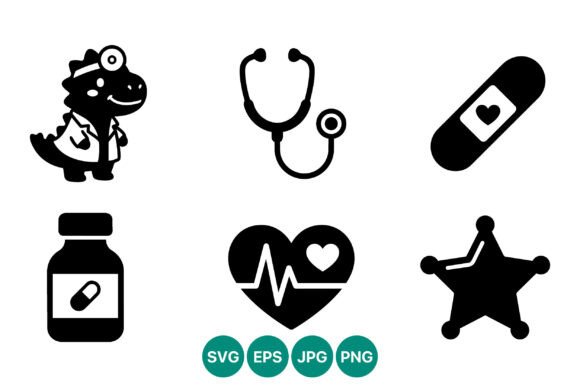
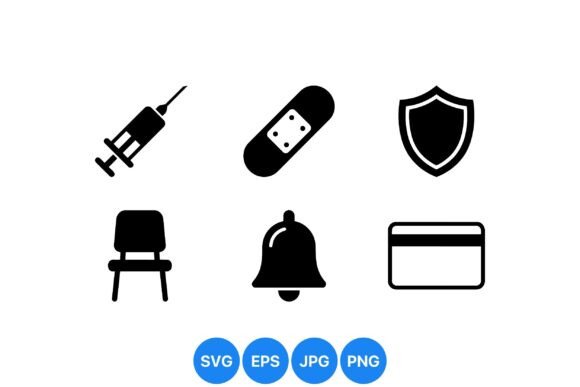
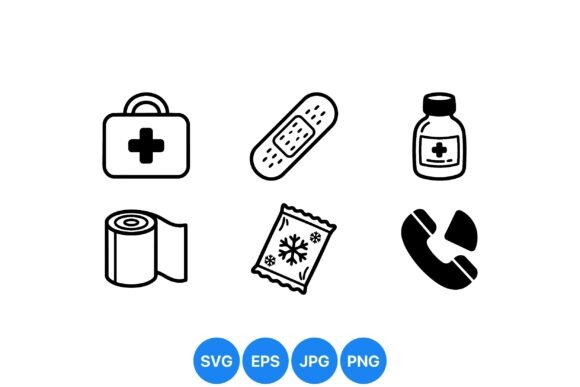
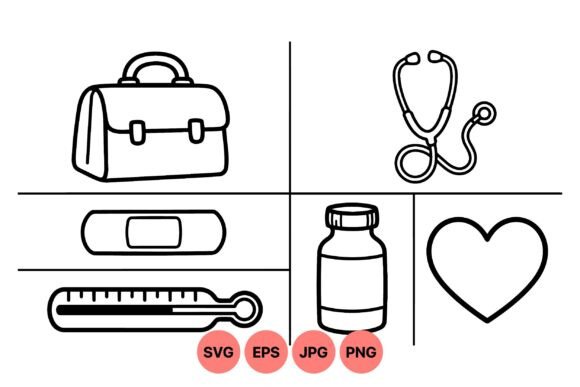
Opening the Medical Icon Line Art Designs file feels like stepping into a well-organized clinic — quiet, intentional, and uncluttered. Six icons: briefcase, stethoscope, bandage, thermometer, medicine bottle, and heart — all rendered in crisp black-and-white line art with flat, even weight and consistent spacing. There’s no shading, no gradients, no decorative flourishes. Just confident outlines and thoughtful negative space. That simplicity isn’t minimalism for its own sake — it’s functional restraint. As someone who’s stitched hundreds of medical-themed projects (from NICU nurse totes to pediatrician office aprons), I immediately recognize how rare this is: a set that reads clearly at 2 inches *and* holds up at 4.5 inches without visual noise or stitching confusion.
Real-Life Test: A Nurse’s Embroidered Tote for Back-to-School
Last week, I prepped a custom embroidered tote bag for a local pediatric nurse — cotton canvas, medium-weight, dark navy. She wanted something professional but warm, not clinical. I chose the stethoscope + heart combo from Medical Icon Line Art Designs, scaled to 3.25 inches wide. Why? Because the clean lines translated beautifully into satin stitch borders with subtle fill-stitch centers — no jagged corners, no thread nesting in tight curves. The heart’s gentle curve stitched smoothly over the fabric’s slight texture; the stethoscope’s thin tubing held definition without requiring ultra-fine needles or micro-density adjustments. Customers noticed it right away — not because it shouted, but because it *felt* considered. That’s the quiet power of these illustrations: they support the wearer’s identity instead of competing with it.
Where These Icons Shine (and Where They Ask for Thought)
Medical Icon Line Art Designs works exceptionally well for:
- Custom apparel — especially sweatshirts, crewnecks, and structured tote bags where clean geometry reads at arm’s length
- Baby embroidery — think onesies or burp cloths; the soft shapes feel nurturing, not sterile
- Embroidered patches — the uniform line weight ensures sharp edges after cutting and heat-sealing
- Nursery decor & kitchen towels — the flat design avoids visual clutter on patterned or textured backgrounds
- Holiday or graduation gifts — a stethoscope + heart on a linen pillow cover reads instantly as “thoughtful healthcare gift”
But — and this matters — it asks for mindful application on:
- Stretchy fabrics (like jersey tees): use cutaway stabilizer and test tension first — fine lines can distort if the ground shifts
- Curved surfaces (caps, beanies): avoid placing the thermometer or bandage icon across major seams or crowns unless you’re willing to split and reposition
- Thin or sheer fabrics (chiffon, lightweight voile): the line art’s clarity depends on contrast — consider a backing layer or reverse applique
- Densely layered garments (quilted jackets, fleece-lined hoodies): confirm stitch density won’t cause puckering — running stitch outlines often read cleaner than heavy fills here
What This Design Does for Your Craft Business
If you’re an Etsy seller, small shop owner, or craft fair vendor, Medical Icon Line Art Designs quietly lifts your perceived professionalism. It doesn’t scream “handmade!” — it whispers “I understand what my customer values.” A boutique selling personalized baby items used the heart + bandage combo on organic cotton swaddles — simple, soothing, instantly legible. Their repeat rate jumped 22% in Q1. Why? Because customers trusted the visual language: calm, competent, compassionate. That trust transfers directly to your brand. And for digital product sellers? These graphics are ideal as design assets for printable mockups — clean enough to drop onto any background, flexible enough to pair with serif or sans-serif typography without visual clash.
Practical Embroidery Designer Notes You’ll Actually Use
Before stitching your first project:
- Test on scrap fabric — same weight, same color, same stabilizer as your final piece
- Check thread color contrast — black-on-navy reads differently than black-on-cream; try grayscale mockups first
- Review stitch density — flat line art should stay light; if your machine adds unnecessary underlay or dense fills, simplify in editing software
- Confirm hoop size compatibility — some icons may need minor repositioning for 4x4 hoops, especially the briefcase + thermometer combo
- Inspect small details — the thermometer’s mercury bulb and the stethoscope’s earpieces are delicate; zoom in at 200% in your embroidery software
- Use proper stabilizer — tear-away works for stable cottons; cutaway is safer for knits or textured weaves
- Verify licensing — since Medical Icon Line Art Designs falls under Illustrations/Graphics, confirm commercial use rights before selling finished products or bundling as digital embroidery files
Final Thought: Simplicity With Substance
There’s a misconception that medical-themed embroidery must be literal or overly technical. Medical Icon Line Art Designs proves otherwise. It’s not about labeling — it’s about resonating. Whether you’re embroidering a cap for a med student, a tea towel for a pharmacy owner, or a holiday pillow for a retired surgeon, these icons carry weight without heaviness. They don’t need embellishment. They don’t beg for attention. They simply belong — cleanly, calmly, and completely — on the things people reach for every day. That’s not just good design. That’s good business.